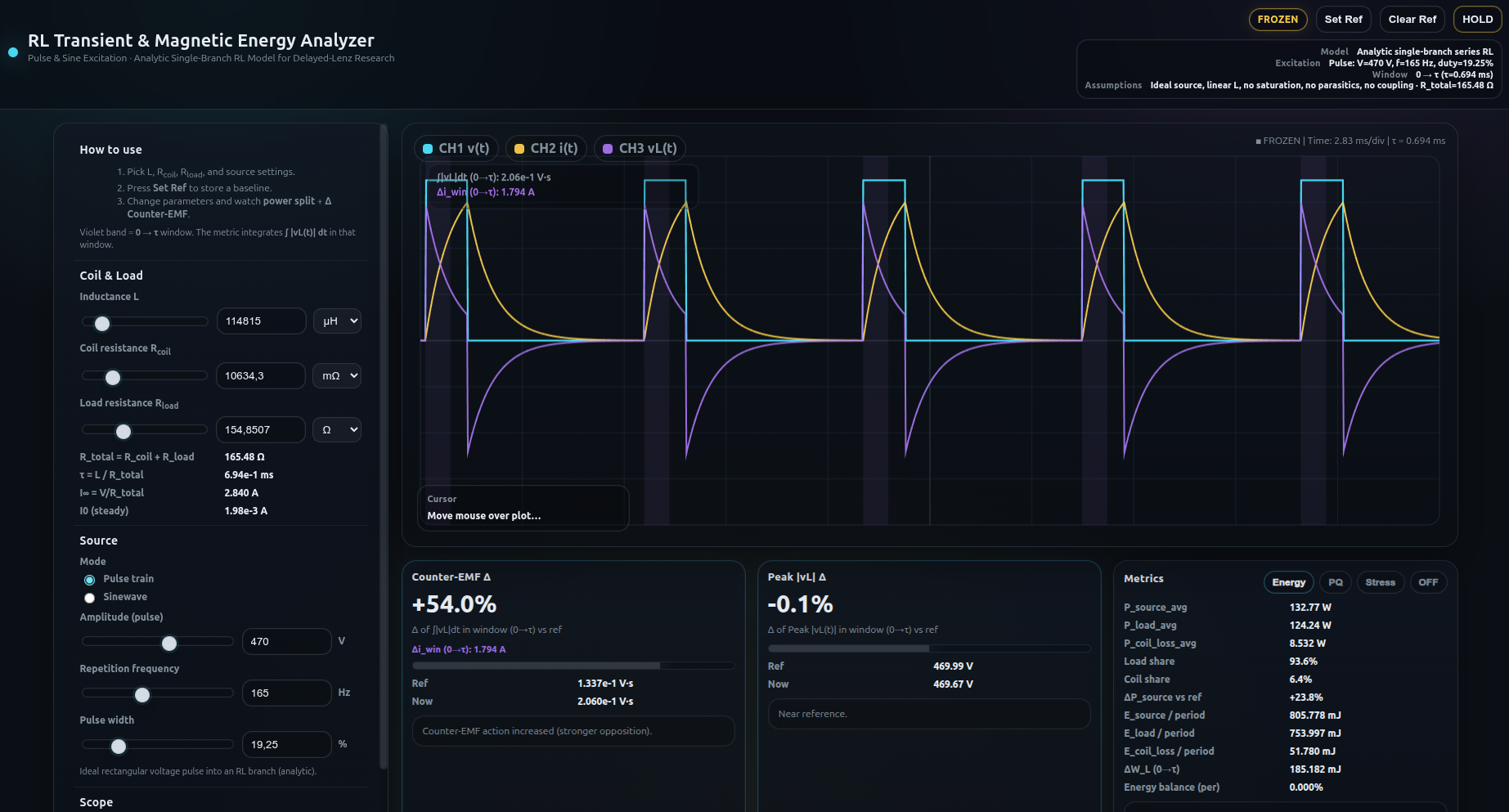
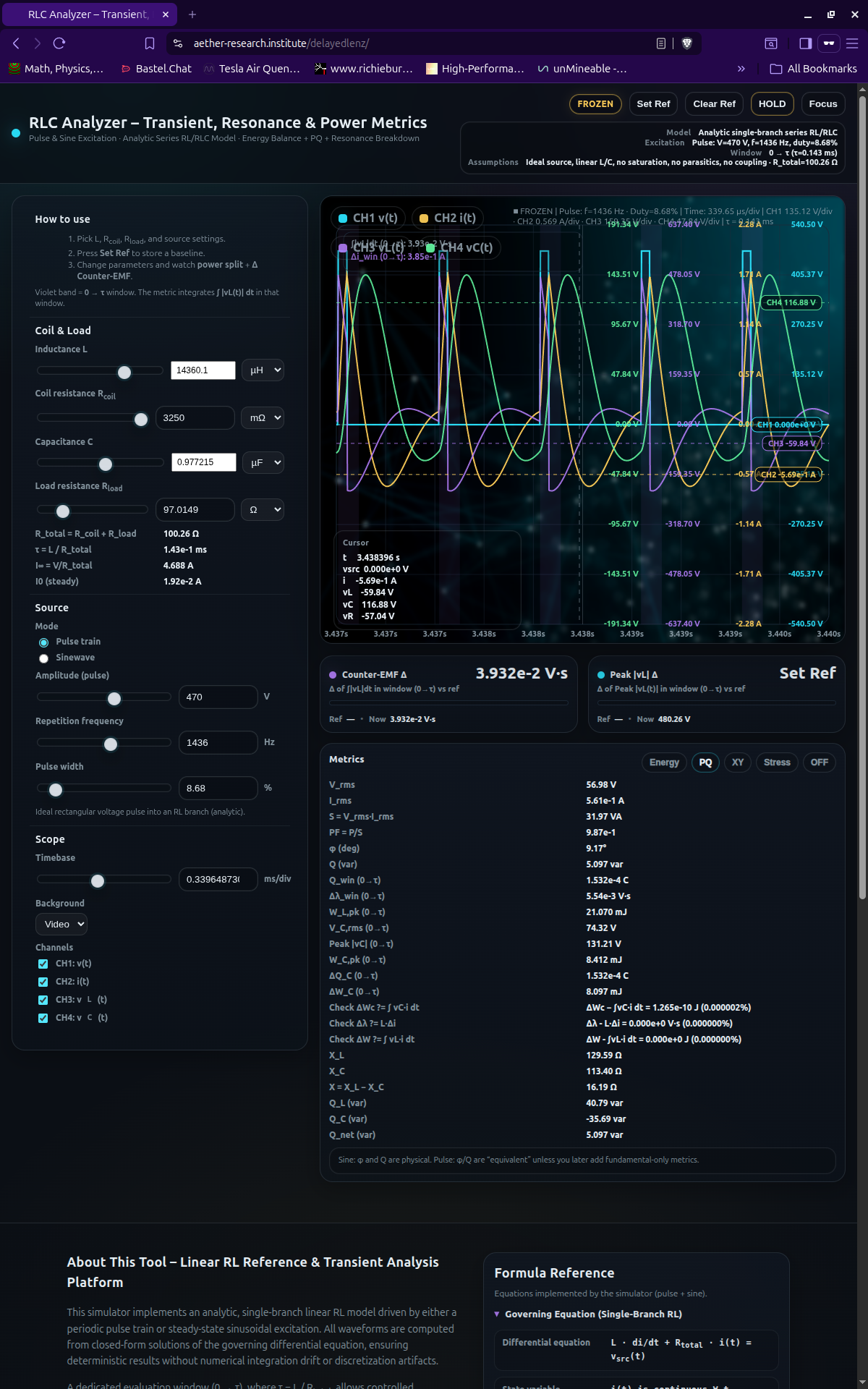
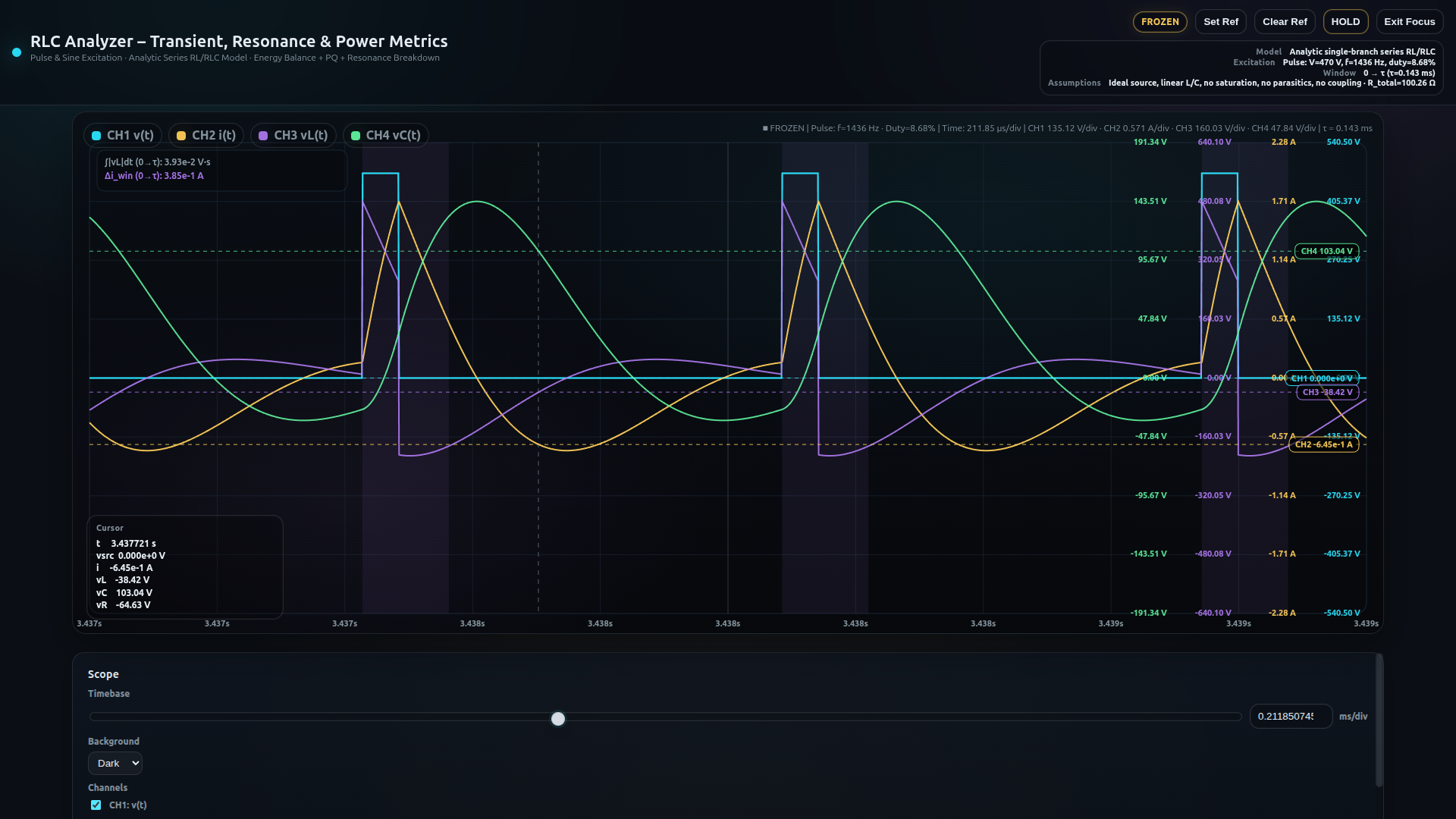
A few weeks ago i decided to dive into this interesting subject. I think you all are familiar with this topic and know about the work of Thane Heinz and others.
My approach is similar but i start with some non-complicated math. Goal is to know how much delay a coil system should have to benefit from this effect. Therefore we have to measure the ohms and henry from a coil to calculate the time constant T which plays a key role here.
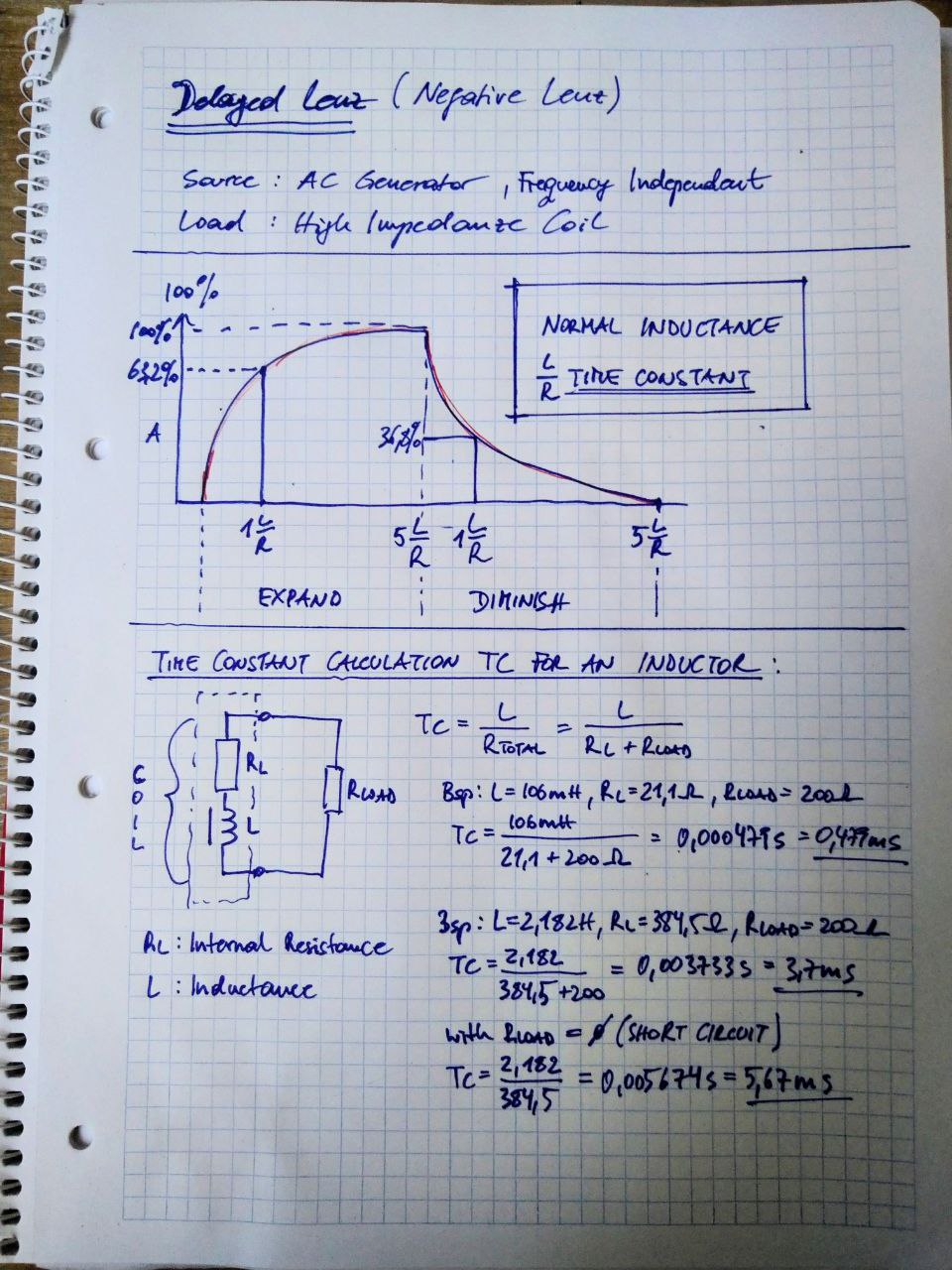
as we can see, if we shorten the secondary from transformer the time delay gets big. and the force which acts against our primary source dipole loose strength  so this is what we want maybe...
For any RL system, the time constant is:
\(
\tau = \frac{L}{R_{\text{total}}}
\)
where:
* \(L\) is the effective inductance seen by the current path
* \(R_{\text{total}}\) is the total series resistance (winding resistance, external resistors, and any equivalent resistive damping introduced by loads or coupling networks)
a bit more of this can be found at: https://aether-research.institute/MSO5000_liveview_doc/delayed_lenz_coupled_inductors/