Replication Don Smith's Device No. 9

  • 1.2K Views
  • Last Post 8 hours ago
ScientificVoyager posted this 3 weeks ago

Hi everyone. 

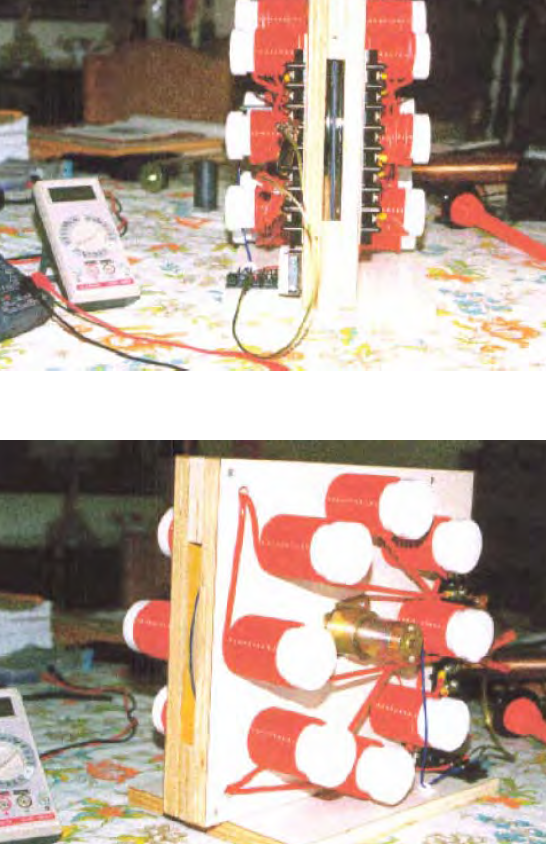
For some time now, I have been interested in Don Smith's replica No. 9. There is not much information about this device, but I decided to make a small replica of it.

Any information about this device would be greatly appreciated.

I have conducted some small tests and the results are really interesting because I managed to light a small bulb with two small coils, magnets and a steel disc with holes.

When powering the motor rotating the disc and connecting the load to the coils, the motor driving the steel disc did not feel any resistance while the bulb was lit, with no change in current consumption. That is why I found the effect very interesting and decided to do something more meaningful.

I am in the process of gathering materials and will share my observations with you from time to time.
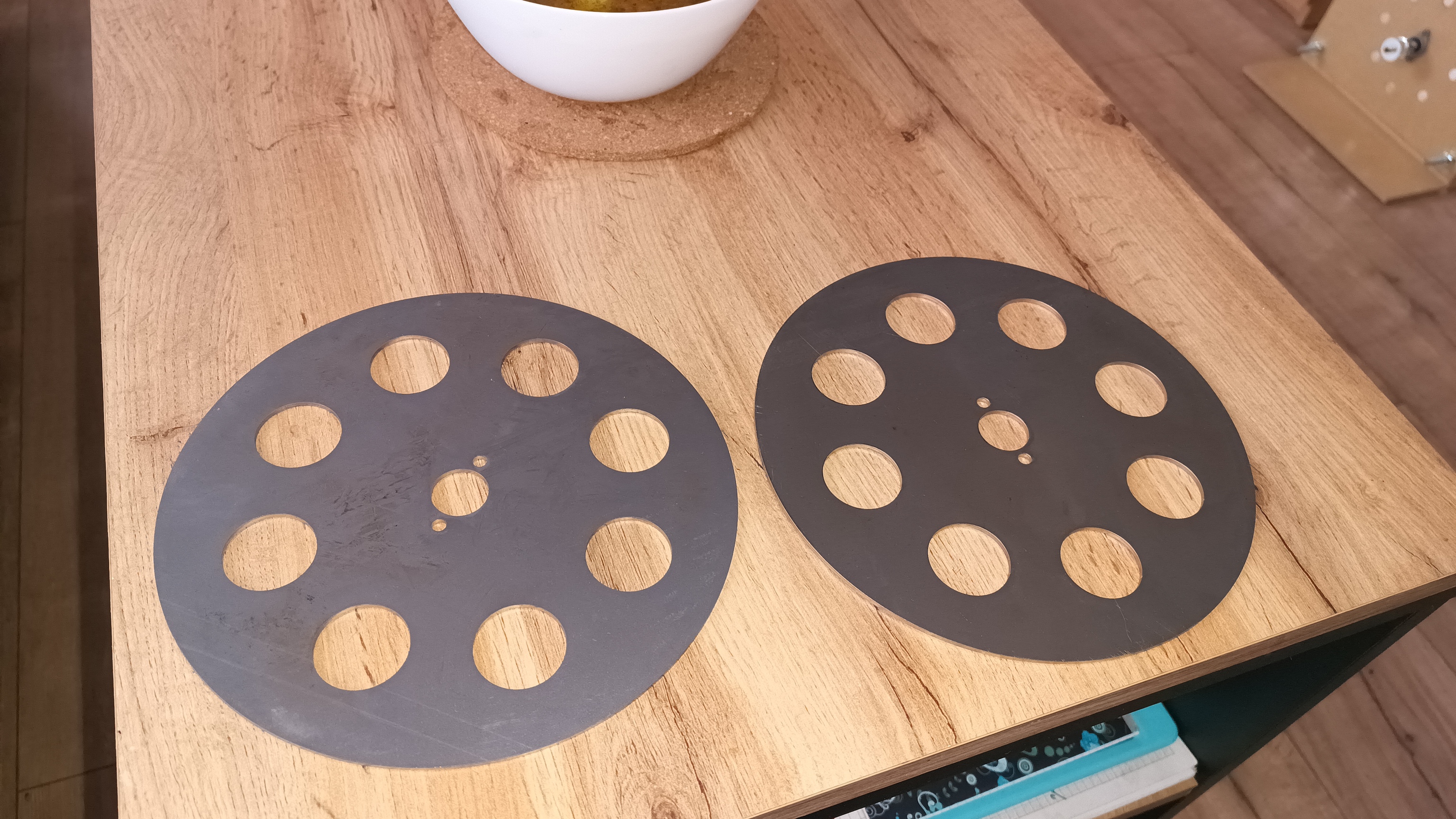
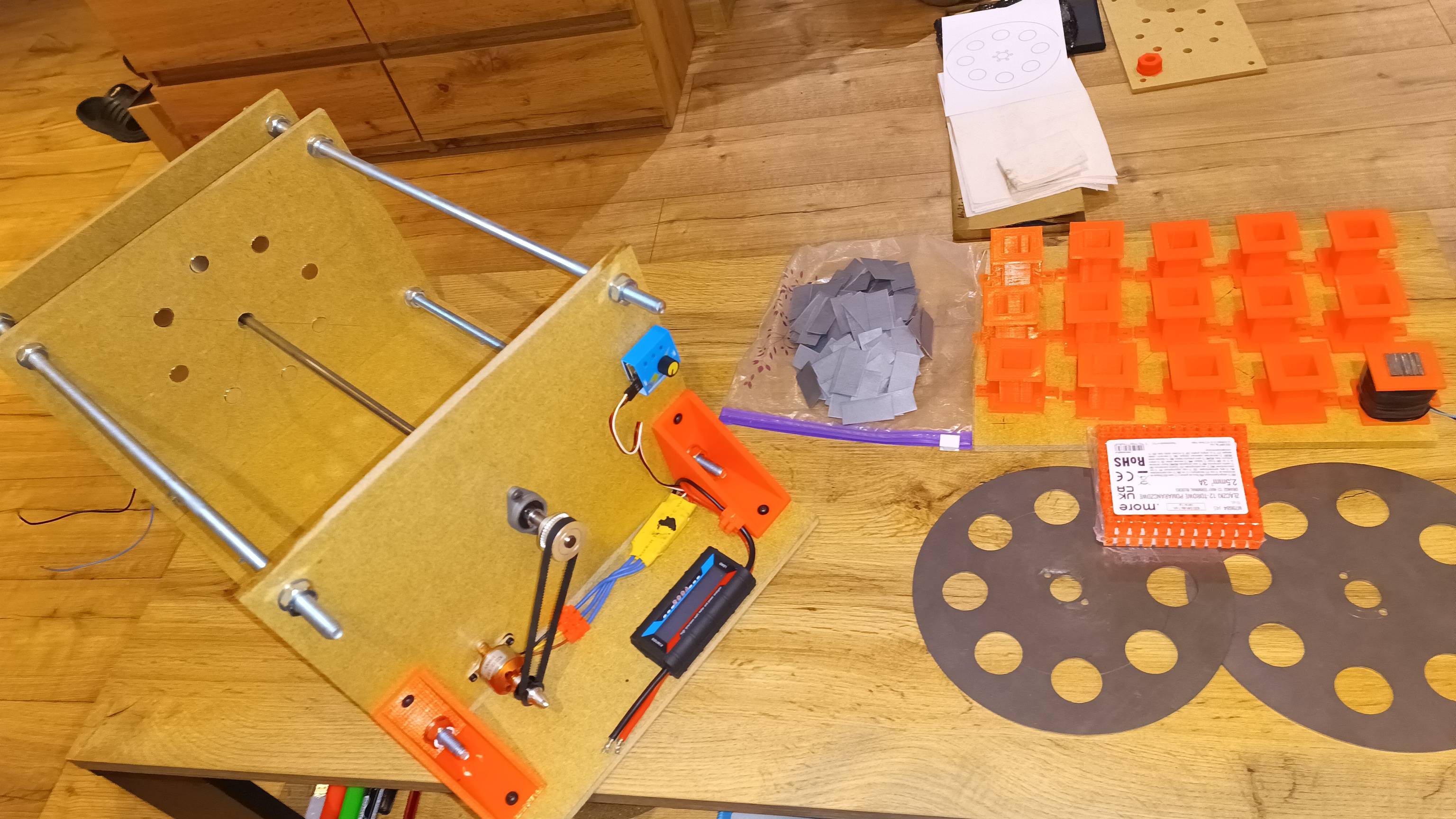
In general, I have made a wooden structure to put it all together. I commissioned a company that laser cuts such things to make metal discs. The first discs will be made of ordinary steel. I designed the coil spools in FreeCad and they are being printed. Now I am waiting for a delivery of silicon sheet metal to make the coil cores.

Has anyone attempted to investigate this effect?

The future belongs to those who can imagine it. N.Tesla

Order By: Standard | Newest | Votes
ScientificVoyager posted this 3 weeks ago

Hi everyone. 

For some time now, I have been interested in Don Smith's replica No. 9. There is not much information about this device, but I decided to make a small replica of it.

Any information about this device would be greatly appreciated.

I have conducted some small tests and the results are really interesting because I managed to light a small bulb with two small coils, magnets and a steel disc with holes.

When powering the motor rotating the disc and connecting the load to the coils, the motor driving the steel disc did not feel any resistance while the bulb was lit, with no change in current consumption. That is why I found the effect very interesting and decided to do something more meaningful.

I am in the process of gathering materials and will share my observations with you from time to time.
In general, I have made a wooden structure to put it all together. I commissioned a company that laser cuts such things to make metal discs. The first discs will be made of ordinary steel. I designed the coil spools in FreeCad and they are being printed. Now I am waiting for a delivery of silicon sheet metal to make the coil cores.

Has anyone attempted to investigate this effect?

The future belongs to those who can imagine it. N.Tesla

Jagau posted this 3 weeks ago

Hi Grzegorz

Are you referring to this D.S. effect?


Jagau

What we consider to be empty space is merely a manifestation of unawakened matter. N.T.

ScientificVoyager posted this 3 weeks ago

Hi Jagau.


Yes, this is exactly the replica I want to make, but I will have several steel disks, which is why my case is so wide. I wanted to have more space in the case for experiments.
Today I received two steel disks.

I know they should be made of soft steel or PVC plates coated with ferrite, neodymium, or other powders; that's something I'll think about later.

I read a lot and watch Don Smith's videos, I'm constantly learning something new.

I found a video showing a replica of this device made by a Russian.

I had previously conducted a test on two small coils, as shown in this video, and the results were consistent. Therefore, I decided to see for myself what would happen if I used multiple coils and magnets in two or three sections. I have a lot of testing ahead of me with different discs and coil and magnet arrangements, but the initial tests were successful. Of course, there was no excessive efficiency, but I noticed similar effects that proved the absence of motor braking and the Lenz effect.


The future belongs to those who can imagine it. N.Tesla

Jagau posted this 3 weeks ago

Excellent, Grzegorz!

You're a true researcher; I'll follow your experiment with great interest.

Thank you for sharing.

💯

Jagau

What we consider to be empty space is merely a manifestation of unawakened matter. N.T.

andy2 posted this 3 weeks ago

Hi @ScientificVoyager,

I have no personal experience with this, but some time ago I discussed with Mozart here and I thinkg it is exact the same thing described. Look at this topic

http://typeright.social/forum/showthread.php?tid=528&pid=1351#pid1351

maybe you can take some inspiration.

"Any ferromagnetic material placed between 2 magnets in repulsion at equal distance can slide between magnets with almost no resistance." etc

A.

ScientificVoyager posted this 3 weeks ago

Quoting:andy2

Hi @ScientificVoyager,

I have no personal experience with this, but some time ago I discussed with Mozart here and I thinkg it is exact the same thing described. Look at this topic

http://typeright.social/forum/showthread.php?tid=528&pid=1351#pid1351

maybe you can take some inspiration.

"Any ferromagnetic material placed between 2 magnets in repulsion at equal distance can slide between magnets with almost no resistance." etc

A.

Hi @andy2

Thank you for sending the link, I will review the information.

Great material. I've read it, and this is exactly what I want to research and present.

Knowledge on this subject is crucial for Don Smith's System No. 9.

I will conduct the first tests on steel disks, but I am currently analyzing suppliers of rare earth metal powders.

Thanks


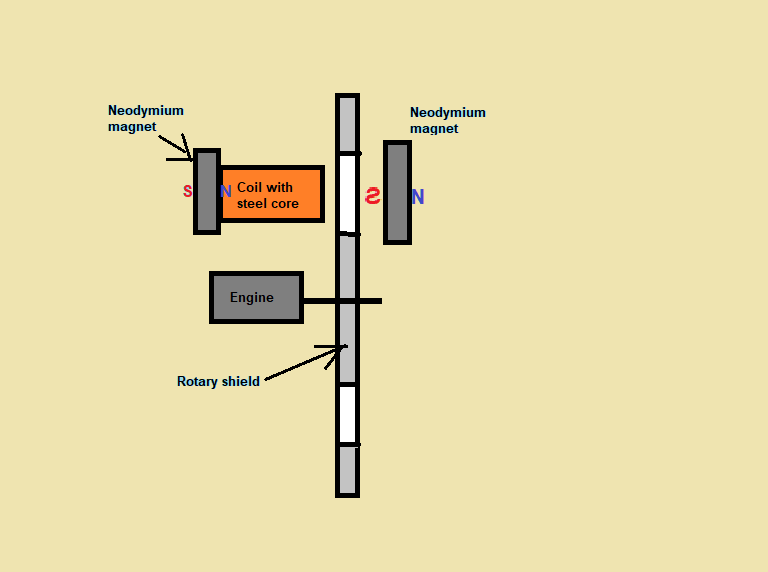
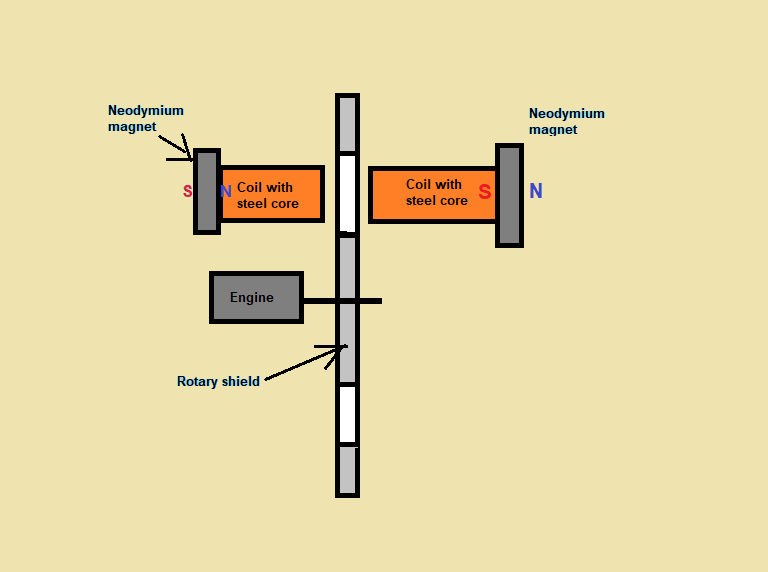
The first tests I conducted were as shown in the attached drawings.

In both cases, current and voltage are generated without affecting the motor, which I will try to demonstrate.


The future belongs to those who can imagine it. N.Tesla

ScientificVoyager posted this 3 weeks ago

Watching the film, we see this

In this case, we have a coil with a magnet, a disc, a magnet, a disc, and again a coil with a magnet.
Exactly as shown in the figure below.
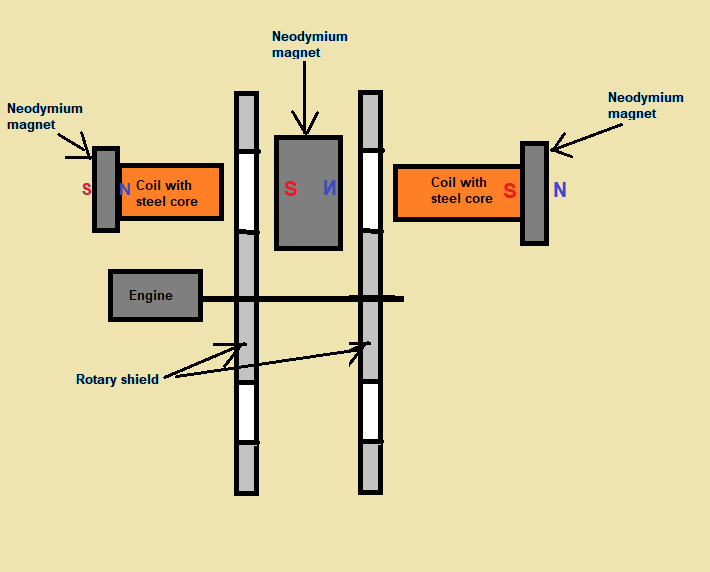
My biggest surprise was when it turned out that the most efficient option is when we have the following arrangement:
coil with magnet/disc/magnet/disc/coil with magnet.
This arrangement can be duplicated as desired.

I mentioned earlier that I tested two variants:
1. coil with magnet/disc/magnet
2. coil with magnet/disc/coil with magnet

It turned out that in the first variant I had better voltage and current than in the second one. 

That is why the user from Russia went this way, as it is the most effective and efficient method.
In this situation, there is a momentary interaction between the magnet and the disc, but only at the start-up moment.
When everything is spinning, the motor feels a constant slight resistance that is not related to the current consumption from the coils, even  during their short circuit.


I think this effect is justified because the rotating disc does not generate a magnetic field opposite to that of the coils and therefore there is no Lenz effect. There is only a small constant resistance associated with the attraction of the disc to the magnets, and it is constant and uniform to them.
The eddy currents in the disc are negligible because it is pure steel. Copper or aluminum discs are not suitable for this, and the best results can be achieved when using plexiglass discs covered with ferrite or neodymium powder.

If there is no Lenz effect, there is nothing to prevent you from squeezing as much as possible out of it. 


The key aspect is how we will draw power from the coils.


The power generated on the coils is a pure sine wave, but only when there are fairly equal intervals on the rotating disc. 

The load must use both halves of the sine wave, then there is no Lenz effect. On one half of the sine wave, the power consumption of the motor increases, and on the other, it decreases, so when we connect a purely resistive load or through a rectifier bridge, both effects cancel each other out and power is produced at no cost.


Don Smith said that the coils inside have magnets, which I don't think is entirely true (the magnet alone is not enough). I think it's just his special disinformation technique to keep everything under wraps.

I also tested this variant, and in this case, after my tests, the results were the worst, or rather, there were no results at all. The Bloch wall was unable to perform its function in this case, and it is necessary for the magnet to be attached to the side of the coil to its core.

After some thought and a few small experiments, I have come to the conclusion that the D.S. coils looked more or less like the ones in the drawing. But these are only my assumptions and they may be wrong, but I will definitely check this option. 
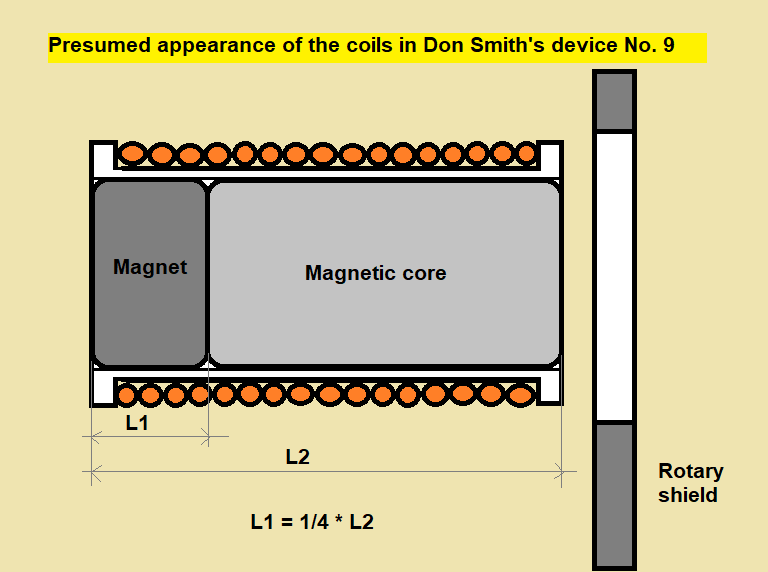
 

The future belongs to those who can imagine it. N.Tesla

ScientificVoyager posted this 3 weeks ago

Quoting:patdet

The system works in attraction mode.   Only 4 magnets needed with coils wrapped on them. You don't need the rotor but can use a pulsed pulling electromagnet to do the job.

Please don't clutter the thread with irrelevant information. If you have any experience with this particular DS 9 device, I'd love to hear from you.

I would like to stick to the specific topic of this thread.

There are people on this forum who really want to help, and there are those who want to expand their knowledge.

It really doesn't help to stray from the topic.
Cluttering up the thread and duplicating posts creates chaos and inconsistency.


Therefore, I kindly ask you to delete the two duplicate posts as they do not contribute anything to the topic.

The future belongs to those who can imagine it. N.Tesla
Fighter posted this 3 weeks ago

Hi ScientificVoyager,

I deleted those posts.

Regards,

Fighter

"If you want to find the secrets of the universe, think in terms of energy, frequency and vibration."
Nikola Tesla
ScientificVoyager posted this 3 weeks ago

Quoting:Fighter

Hi ScientificVoyager,

I deleted those posts.

Regards,

Fighter

Thank you so much. Everything looks better now.

Best regards.


PS
I mistakenly marked the polarity of the magnets incorrectly in the drawings, this has now been corrected.

The future belongs to those who can imagine it. N.Tesla

ScientificVoyager posted this 6 days ago

Overall, not much has happened on this topic for me, as my household chores have intensified.

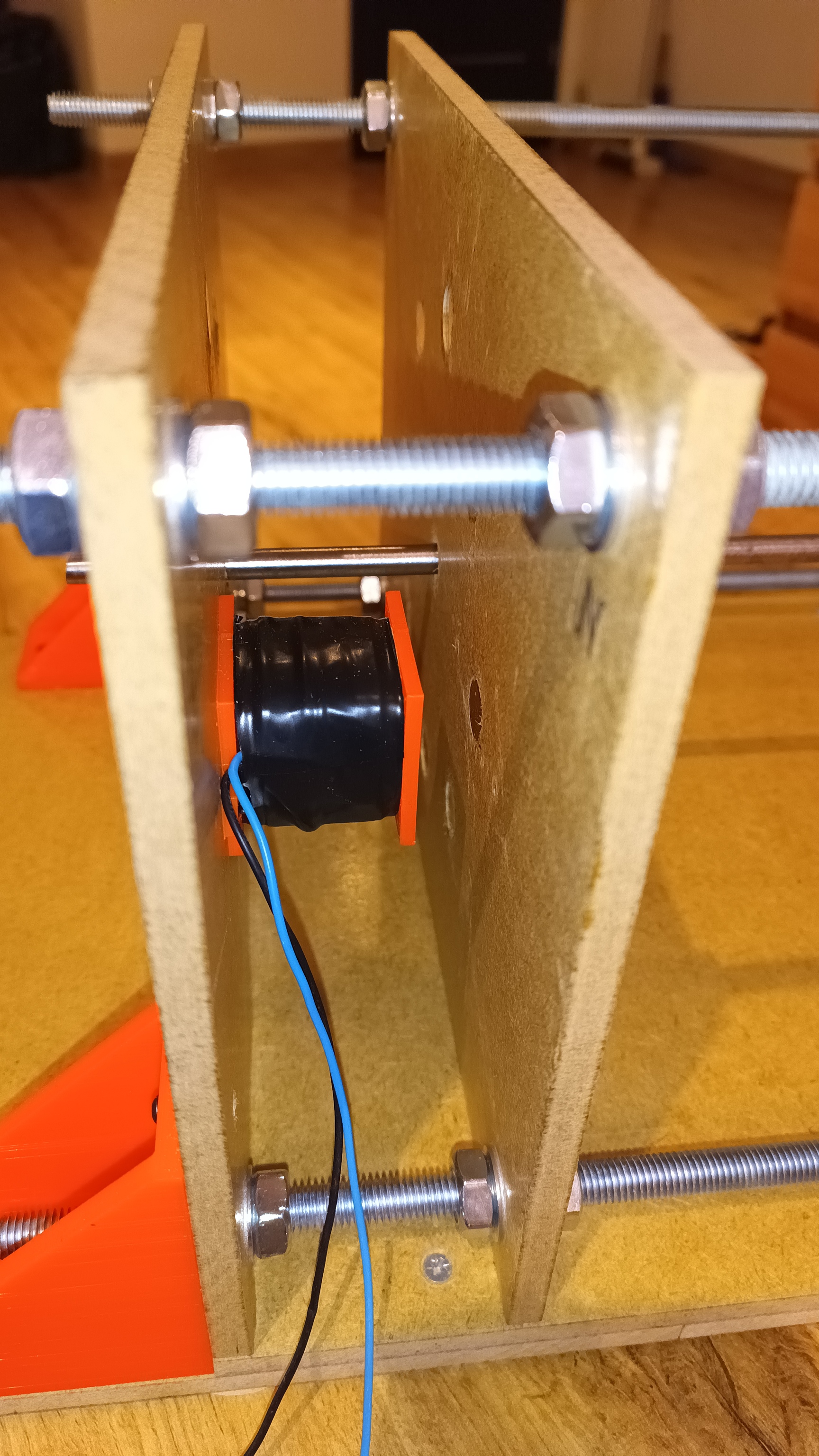
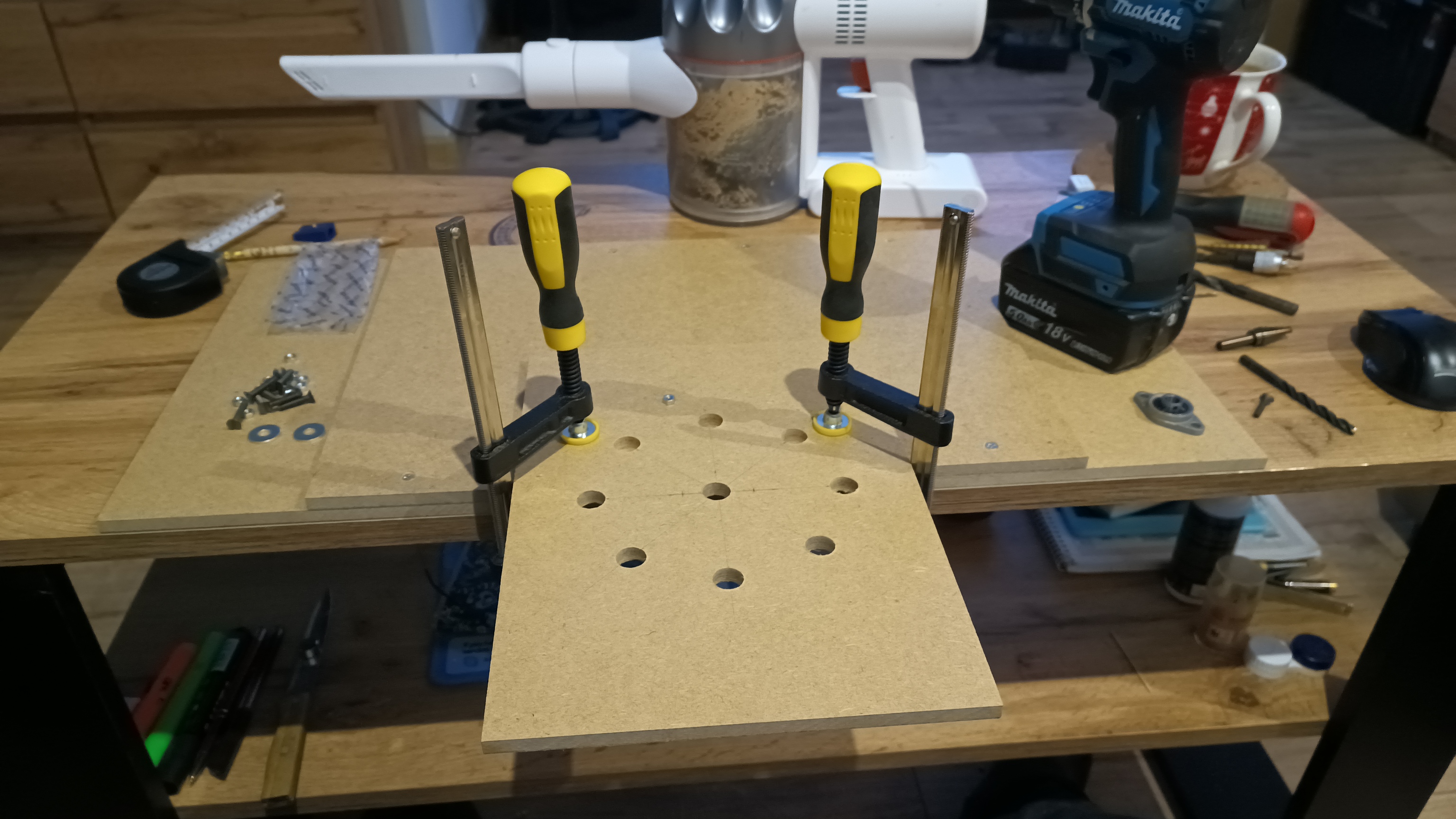
The bobbins have been printed, I've wound two coils, and unfortunately, I have to manually cut the metal sheets for the coil cores – tedious work  .

I designed the disc holders to attach to the shaft and had a company make them out of metal. I had a 3D-printed holder, but it couldn't handle the rotation and, predictably, fell apart.


The shield holder's durability tests ended in failure, so I had to redesign a new one. I outsourced it to a metal fabrication company, and it should be fine.  

I will have a new disc holder in two weeks, but until then I will print the one I had again and do at least one test with one coil and magnets to show you that the produced current does not load the rotor even when the coil is short-circuited.


I also need to consider the ratio of holes in the disc to coils. I've concluded that the number of coils and holes in the disc can't be equal, and I'll have to make changes in this regard.

I already have eight holes on the disc, and I don't want to change that yet. Therefore, based on my conclusions, I think I should have six coils. Then the cogging torque between the disc, the coils, and the magnets cancels out, but that's just my guess.

Is there a program that simulates the correlation of these phenomena to minimize this problem?
So, my question is: could someone confirm this?

The future belongs to those who can imagine it. N.Tesla

Close