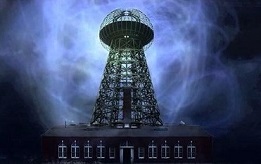
Replication Don Smith's Device No. 9

  • 3.6K Views
  • Last Post 3 weeks ago
ScientificVoyager posted this 10 February 2026

Hi everyone. 

For some time now, I have been interested in Don Smith's replica No. 9. There is not much information about this device, but I decided to make a small replica of it.

Any information about this device would be greatly appreciated.

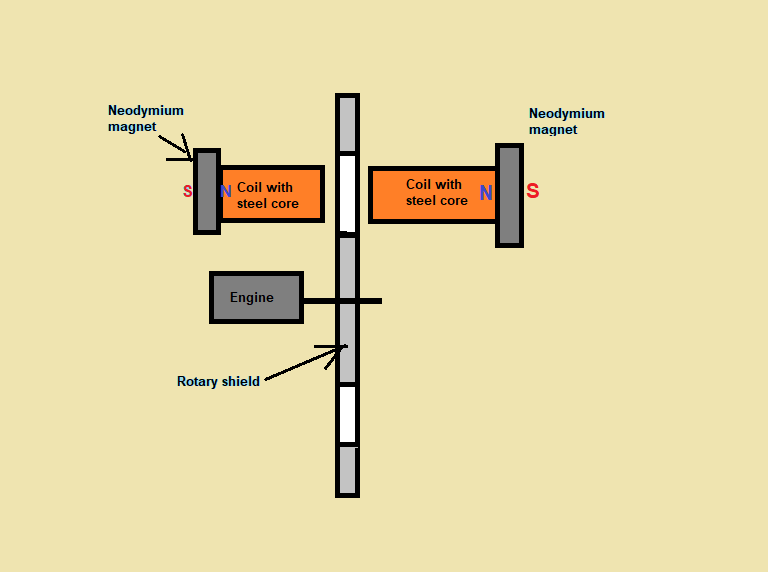
I have conducted some small tests and the results are really interesting because I managed to light a small bulb with two small coils, magnets and a steel disc with holes.

When powering the motor rotating the disc and connecting the load to the coils, the motor driving the steel disc did not feel any resistance while the bulb was lit, with no change in current consumption. That is why I found the effect very interesting and decided to do something more meaningful.

I am in the process of gathering materials and will share my observations with you from time to time.
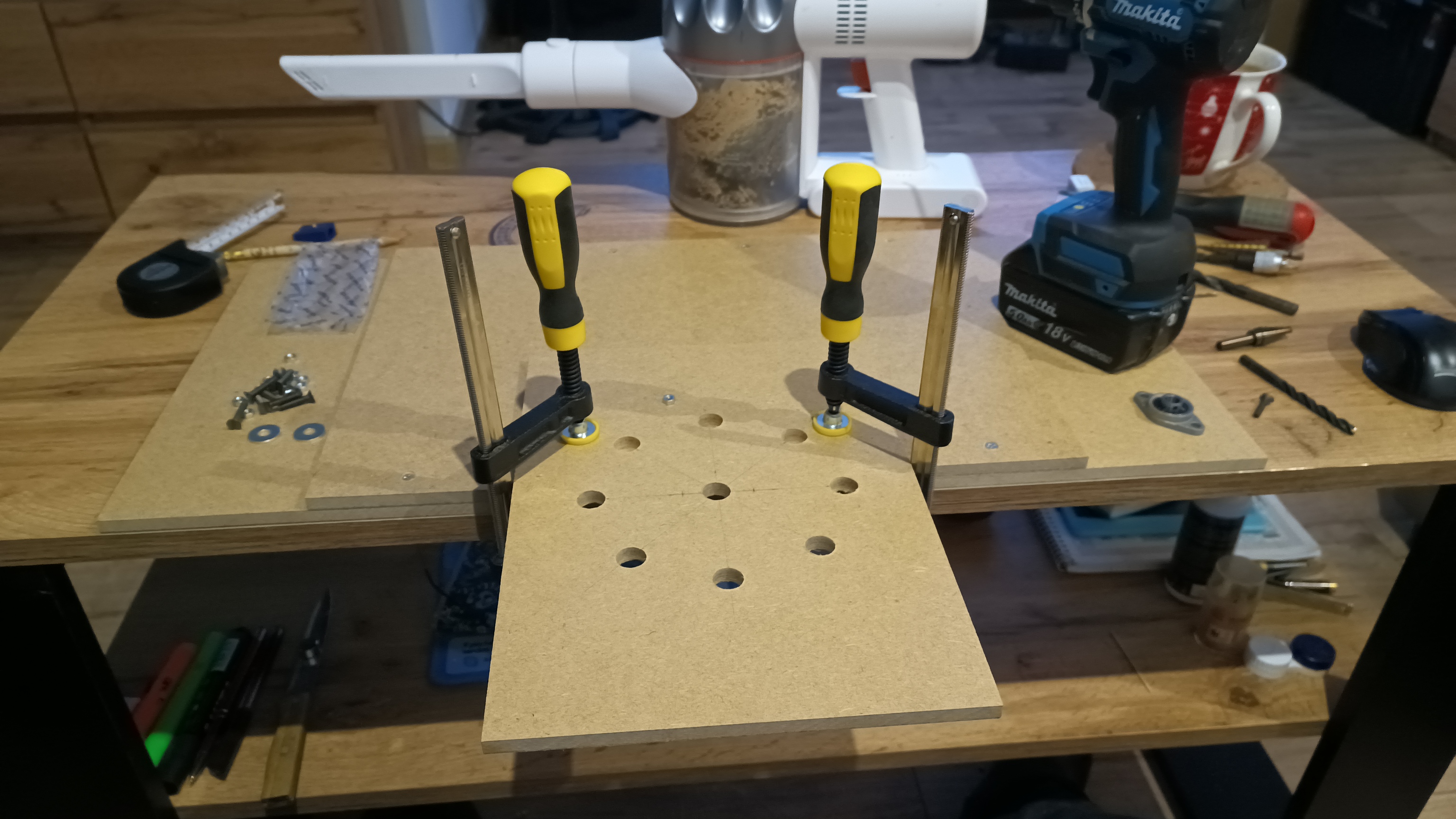
In general, I have made a wooden structure to put it all together. I commissioned a company that laser cuts such things to make metal discs. The first discs will be made of ordinary steel. I designed the coil spools in FreeCad and they are being printed. Now I am waiting for a delivery of silicon sheet metal to make the coil cores.
Has anyone attempted to investigate this effect?

The future belongs to those who can imagine it. N.Tesla

ScientificVoyager posted this 27 February 2026

Quoting:baerndorfer

i watch your thread with great interest. i know a bit obout don smith but have not tried out, what you actually started. a thing that don smith never mentioned (or maybe i missed it) is, that if we can remove counter-emf force which acts on primary then our generator will deliver for free and can run with very less input. maybe this is what we all like to have.

yesterday i watched a video that i like to share. hope it helps!


have a nice day

B

Thanks for the link. This guy has some really interesting information. The magnetic diode is what we're striving for in these machines.
You reminded me of a video I watched recently where someone explained how his coils worked without the Lenz effect. I haven't tested it, but that experiment is still on my mind . I'll try to post it here.


Here is this video about the coil without the Lenz effect.

Have a nice day.


The future belongs to those who can imagine it. N.Tesla

ScientificVoyager posted this 28 February 2026

Hi everyone.

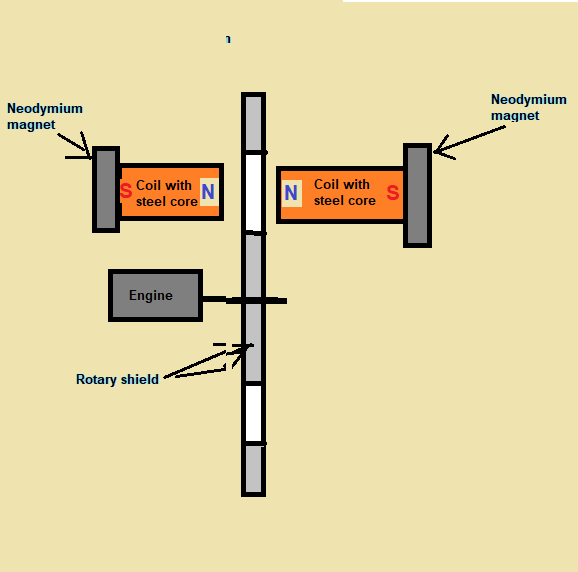
I ran a second test, this time with two coils. I tried to run this test at the same RPM (1845 and 3525 ) as before to have something to compare it to. I connected the coils in series and parallel. In the parallel connection, the current doubled, but the voltage remained the same. In the series connection, the current remained the same, but the voltage increased.

I conducted the experiment according to the diagram below.

These aren't spectacular results, but such experiments always teach you something.
I have one more test ahead of me before I make some changes to the project.


The future belongs to those who can imagine it. N.Tesla

ScientificVoyager posted this 03 March 2026

Welcome back "beyondunity.org" . I'm glad that everything went quickly and smoothly.


Returning to my second test, it turned out worse overall than the first. I'm wondering what happened to my voltage sine wave, why it's so uneven. I previously tested it on another makeshift machine, and the sine wave looked much better there. I used narrow coils there, and the cores were simple bolts and nuts.

The rotary disc was also different, I used a 5mm thick quad gear, whereas my current discs are made from high carbon, hard steel used for kitchen knives, so I will have to investigate this further.

I use GO (Grain-Oriented) electrical steel sheet for transformers as coil cores, but I should have used NGO (Non-Grain-Oriented) sheet, which is used for motor and generator stators, but I do not have any at present.

I noticed in the second test that despite connecting two coils in series, the voltage was still lower than in the first test with a single coil, because one of the magnets was close to the disc itself. So, the third test will be interesting.

In general, tests show that connecting a diode to the coil output increases power consumption in one direction, while decreasing power consumption in the other. Video recordings show an uneven distribution of currents on the upper and lower envelopes of the sine wave, causing these currents to be distributed unevenly. However, in the case of a pure coil short circuit, Lenz's law works in our favour, and in order for it to work regardless of the load resistance, the wave envelope must be symmetrical.

The future belongs to those who can imagine it. N.Tesla

Fernando posted this 03 March 2026

Replying To: ScientificVoyager

Hello, your experience It is very important.

(The rotary disc was also different, I used a 5mm thick quad gear, whereas my current discs are made from high carbon, hard steel used for kitchen knives, so I will have to investigate this further.

I use GO (Grain-Oriented) electrical steel sheet for transformers as coil cores, but I should have used NGO (Non-Grain-Oriented) sheet, which is used for motor and generator stators, but I do not have any at present.)

This will help a lot to perfect this system, much of the information relate and my old replication was lack of power, you already have with your resistive load, this is great. 

Thanks.


ScientificVoyager posted this 03 March 2026

Quoting:Fernando

This will help a lot to perfect this system, much of the information relate and my old replication was lack of power, you already have with your resistive load, this is great. 

Thanks.


Hi Fernando. 
I made a few mistakes at the beginning and will probably make more. Only those who do nothing make no mistakes. We probably both made the same mistakes, because at the beginning I set the magnets to attraction mode, which is wrong. Magnets must repel each other; that's the first rule. The second rule is that the disc must be made of soft steel, but unfortunately I used hard steel. 
I try to describe what is happening and what mistakes I am making in a credible way so that I can move on.

The future belongs to those who can imagine it. N.Tesla

Fighter posted this 04 March 2026

Quoting:ScientificVoyager

Welcome back "beyondunity.org" . I'm glad that everything went quickly and smoothly.

Thank you ScientificVoyager, as I expected the ISP was reluctant to open the required ports and let our server outside its firewall but in the end it had no choice because I presented solid arguments.

They warned me that the server will be exposed to attack attempts and so on but that's not a problem because our firewall is able to handle thousands of scans and attack attempts every day since the first day we came online. 🙂

Regards,

Fighter

"If you want to find the secrets of the universe, think in terms of energy, frequency and vibration."
Nikola Tesla
ScientificVoyager posted this 04 March 2026

Quoting:Fighter

Quoting:ScientificVoyager

Welcome back "beyondunity.org" . I'm glad that everything went quickly and smoothly.

Thank you ScientificVoyager, as I expected the ISP was reluctant to open the required ports and let our server outside its firewall but in the end it had no choice because I presented solid arguments.

They warned me that the server will be exposed to attack attempts and so on but that's not a problem because our firewall is able to handle thousands of scans and attack attempts every day since the first day we came online. 🙂

Regards,

Fighter

Thanks for the information. I see we're dealing with a true expert in this field. Thank you for your dedicated input.


PS

Just a little feedback for the administrator.

The website runs very smoothly; in fact, it seemed to me that it was even faster than in the previous location.

The PayPal widget absolutely must be on the front page. I'm currently on sick leave after knee surgery. But I think I'll use this option within three weeks for the safety and development of beyondunity.org.

Have a nice day.

The future belongs to those who can imagine it. N.Tesla

ScientificVoyager posted this 05 March 2026

Hello, everyone.
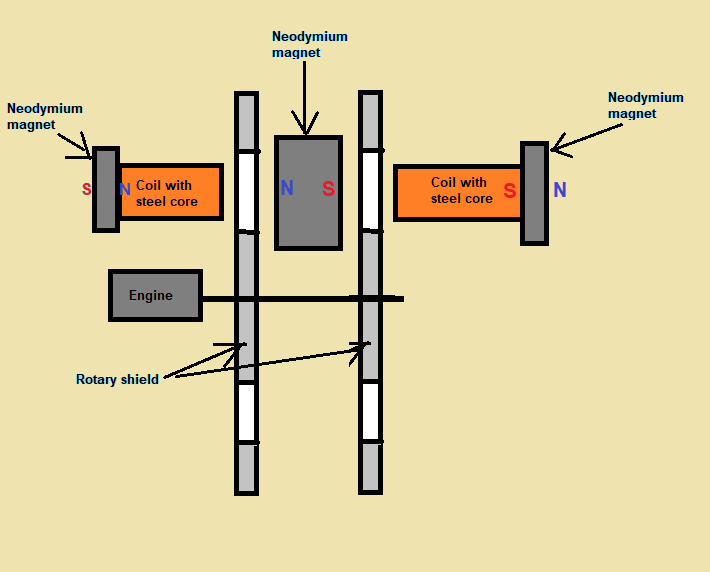
Today, I finally conducted the third test according to this scheme.

Performing this test was difficult because I had to try three times . High speeds caused the disc holders to break. Unfortunately, I had to reduce the speed and keep a greater distance between the magnets and the coil cores. Therefore, the results are not spectacular due to the greater spacing between the components. In this test, I also tried connecting different capacitors in parallel to the coils to capture the resonance at a given rotational speed.

Overall, I am satisfied with the results because, despite the large gap between the coil and the magnet (10mm), I managed to increase the efficiency.

I must repeat this test when I have metal holders for rotating discs.


The future belongs to those who can imagine it. N.Tesla

andy2 posted this 05 March 2026

Nice replication.

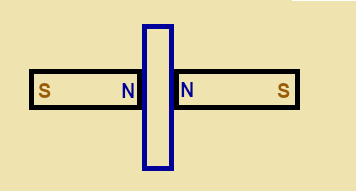
When you have your testing rig, can you test this configuration? Where magnets are in configuration NN (repeling).
What I have heard is that in that configuration should bloch wall move differently 


When magnets are attached to the iron ring (plate) and both are NN, there is much more powerfull magnetic field in the iron. But maybe this behaviour is useless in this rotary device.


Thanks in advance


A.

ScientificVoyager posted this 05 March 2026

Quoting:andy2

Nice replication.

When you have your testing rig, can you test this configuration? Where magnets are in configuration NN (repeling).
What I have heard is that in that configuration should bloch wall move differently A.

Hi andy2.
I can test it, no problem.
Do you mean that I should remove the cores from the centre of the coils and place magnets in NN mode along their entire length?

The future belongs to those who can imagine it. N.Tesla

Close